 English
 Français
 Deutsch
 Italiano
 Русский
 Español
 简体中文
简体中文 हिन्दी
 日本語
日本語
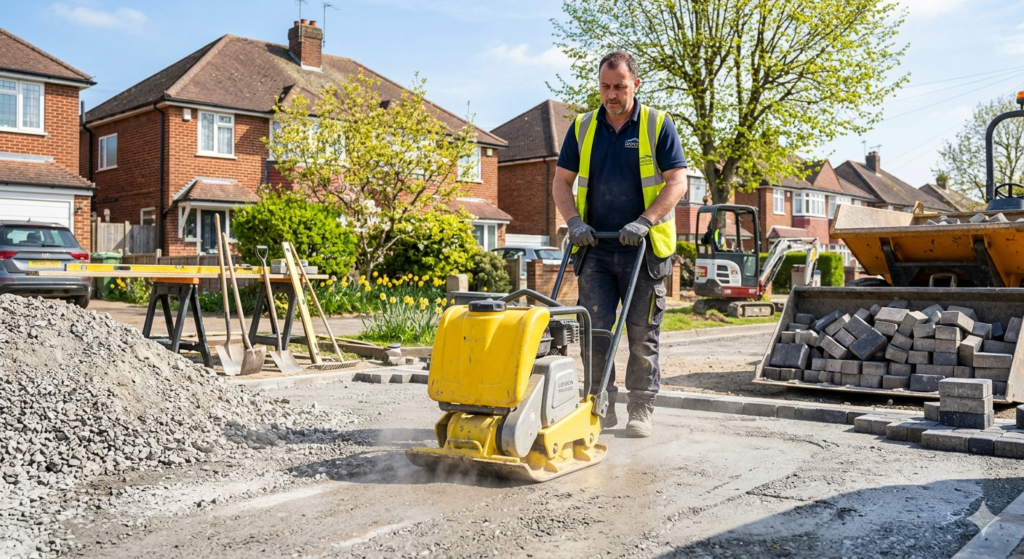
The driveway is often the first thing people notice about your home. It is more than just a place to park the car; it is a major part of your property’s personality. But because driveway paving is a significant project, knowing when to pull the trigger on a renovation is key to getting the best result for your money.
Whether your current surface is cracking or you are simply tired of looking at dated concrete driveway slabs, here is everything you need to know about timing, planning, and permissions.
What is the best time to install a new driveway?
In the UK, the best time to install a new driveway is typically during the spring or early autumn. While modern materials and techniques mean experts can work year-round, these transition seasons offer the most stable conditions.
Extreme cold in the winter can cause the ground to shift or prevent concrete and mortars from setting correctly. On the flip side, a heatwave in the peak of summer can cause materials like asphalt to set too quickly. By aiming for a period of dry, mild weather, you ensure that the sub-base is stable and the finishing materials can cure at a natural pace.
Signs you need to invest in new driveway paving
Sometimes the “right time” is dictated by the condition of your current drive. You should start looking at options for block driveway paving if you notice:
- Standing water: If puddles are forming and not draining away, your sub-base may have failed or your drainage is blocked.
- Deep cracks or potholes: Small cracks can be repaired, but widespread crumbling usually suggests the surface has reached the end of its life.
- Shifting blocks or slabs: If your driveway is becoming uneven, it can become a trip hazard and may even damage your vehicle’s suspension over time.
Do I need permission to redo my driveway?
This is one of the most common questions homeowners ask: Do I need permission to redo my driveway? In the UK, the answer depends entirely on drainage.
You generally do not need planning permission if you use a permeable (or porous) surface that allows water to soak through, such as gravel, permeable block paving, or porous asphalt. You also don’t need it if the rainwater is directed to a lawn or border to drain naturally.
However, if the surface is more than five square metres and you are using impermeable materials (like standard concrete driveway slabs) that don’t have a way for the water to run off to a permeable area, you will likely need to apply for planning permission. This is part of the government’s SuDS (Sustainable Drainage Systems) legislation designed to prevent urban flooding.
Exploring block paving driveway ideas
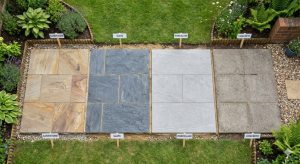
If you have decided that now is the time to upgrade, the fun part is choosing a style. Block driveway paving is incredibly popular because of the sheer variety of designs available.
- The classic herringbone: Excellent for heavy vehicles as the interlocking pattern prevents the blocks from shifting under the weight of the car.
- The random cobble: Perfect for period properties or cottages where you want a more traditional, “lived-in” feel.
- Contemporary charcoal: Using large, dark grey blocks with a contrasting light border creates a sharp, modern look that suits new-build homes.
- Mixing materials: You can combine block paving with gravel or even setts to create unique borders and zones.
What is the average cost of driveway paving?
The cost of driveway paving varies depending on the material and the size of the area. For a standard UK driveway, you can expect to pay:
- Block paving: £70 to £130 per m2.
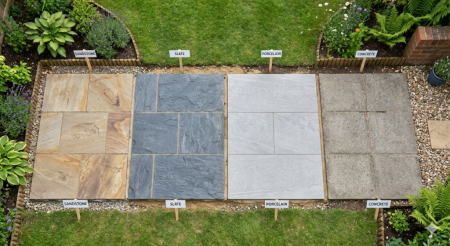
- Concrete slabs: £60 to £100 per m2.
- Resin-bound: £100 to £150 per m2.
- Gravel: £40 to £70 per m2.
While gravel is the most budget-friendly, block paving often offers the best long-term value because individual blocks can be replaced if they become stained or damaged, whereas a solid concrete surface would require a full patch or replacement.
Why use Rated People to find driveway experts
Because a driveway needs to handle the weight of heavy vehicles and deal with the unpredictable British weather, the quality of the groundworks is everything. Finding a tradesperson who doesn’t cut corners on the sub-base is essential.
When you use Rated People to find local experts, you can filter through professionals who have a specific track record in driveway paving. You can see their previous projects, read detailed feedback from other homeowners, and verify their experience with different materials. This means you aren’t just hiring a pair of hands; you are hiring a specialist who understands the local soil conditions and drainage requirements. It gives you the confidence that your new driveway will not only look great on day one but will stay level and weed-free for years to come.
Planning for a smooth installation
Once you have picked your design and found your pro, remember to plan for the disruption. Most driveway projects take between three and seven days. You will need to find alternative parking and ensure your installer has access to water and a place for a skip if necessary.
With Rated People, you have the power to get it done. Find a trusted, local tradesperson today.
Read the full article here