
 English
 Français
 Deutsch
 Italiano
 Русский
 Español
 简体中文
简体中文 हिन्दी
 日本語
日本語
Key Points
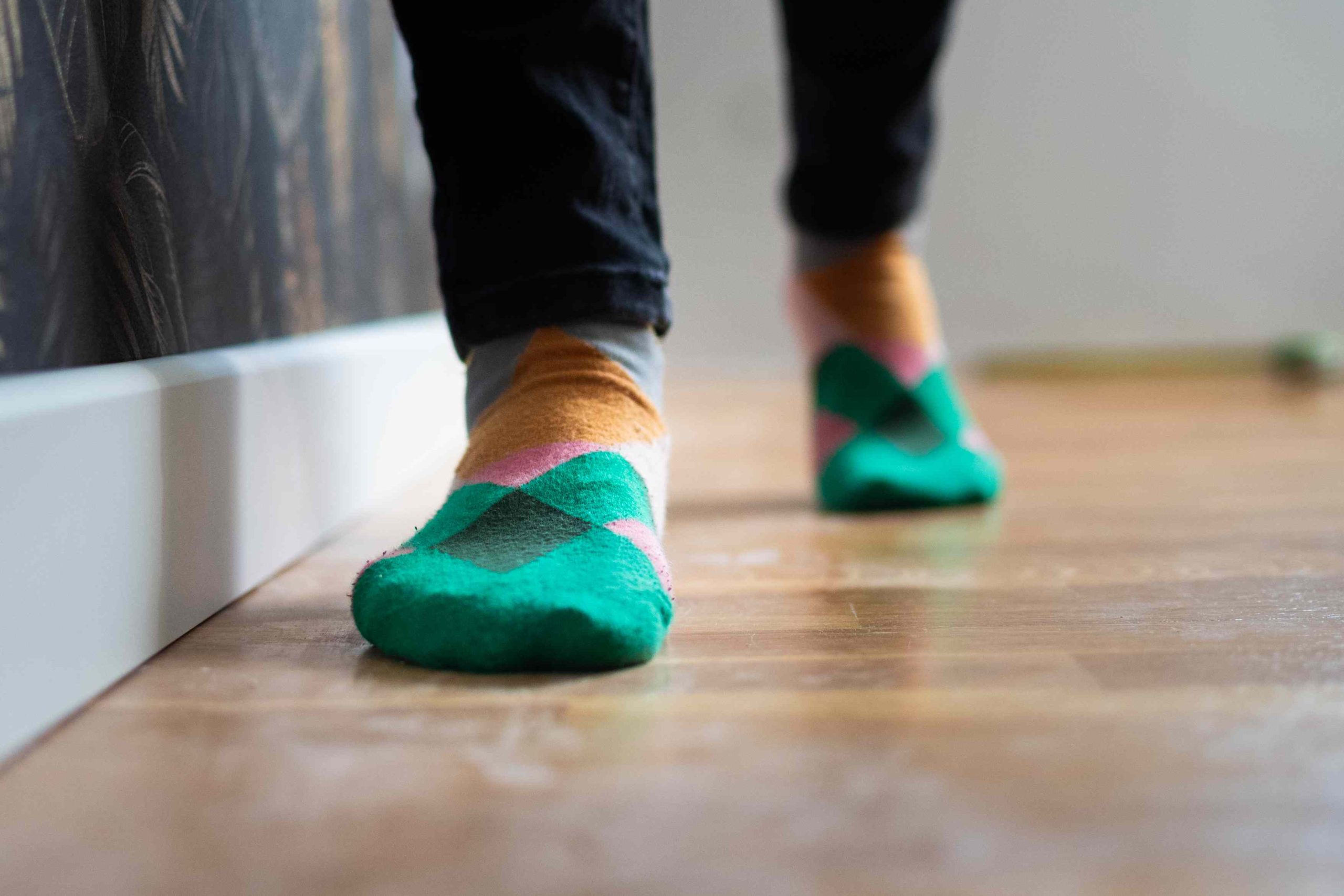
- The finish applied to the floor, cleaning product residue, moisture, or footwear can contribute to slippery wood floors.
- Prevent slippery wood floors by cleaning them properly and wiping up spills immediately
- Adding proper mats at strategic spots can be an additional layer of slip protection.
Wood floors are durable, easy to care for, beautiful, and add value to your home. However, they can be slippery if they are not cared for correctly.
High traffic areas become more slippery as the finish and wood wear down, trapped dust and oily residues contribute to the slipperiness, and even the humidity level contributes to the problem.
Here are seven ways you can fix slippery wood floors to prevent nasty falls.
Wipe Up Spills Promptly
This seems like a no-brainer, but liquids on a floor’s surface is one of the leading causes of falls.
When spills happen, use a towel or mop to remove them as soon as possible. This includes melted snow and ice near doors. Not only will you help prevent a fall, but prompt clean up also helps reduce water rings and stains.
Want more cleaning and organizing tips? Sign up for our free daily newsletter for the latest hacks, expert advice, and more!
Decrease the Humidity Level in Your Home
If your home is excessively humid, the moisture can settle on the floor and leave it slippery. Overly moist air also causes wood floors to swell slightly and become smoother and slicker.
Turn on venting systems, add circulating fans, use your HVAC system to draw out moisture, or add a dehumidifier.
Don’t Miss
Dust Mop and Clean More Frequently
When dust collects on wood floors, it reduces the traction between the soles of our feet and the floor, making it easy to slip and fall. It is especially important to dust mop and clean more during the winter months when homes become dustier due to the lack of fresh air and ventilation.
Start by dust mopping or vacuuming at least twice a week to remove dust and dirt. Mop wood floors weekly with a microfiber mop and a cleaner that is safe for hardwood.
Use the Right Cleaning Product
Some floor cleaners leave behind residue that causes floors to be slippery once they dry. Avoid shine enhancers, silicone-based sprays, or oily polishes on wood floors.
Choose a pH-neutral wood cleaner for the best results and use only the recommended amount for each cleaning.
To get rid of excessive cleaning product buildup, make a paste of baking soda and a small amount of water. Apply the paste to slippery areas using a sponge. Wipe in a circular motion so the gentle abrasive nature of baking soda removes the buildup. Wipe away the residue with a damp microfiber cloth and buff the floor with a dry cloth.
Use Two Entrance Mats
The space around entrance doors is usually the most slippery area in a home. The easiest way to keep this area safe is to use two mats at the doors.
Use a sturdy, weather-proof mat outside the door to catch dirt and mud. Add a second absorbent mat inside the door to soak up moisture. Ideally, have everyone remove wet shoes at the door to prevent tracking in moisture.
Install Anti-Slip Stair Treads
Wooden stairs are one of the most dangerous spots when slippery. Consider adding carpet treads for comfort and safety. Many are available with an adhesive backing that can be applied to freshly cleaned stairs. Be sure the adhesive dries thoroughly before using the stairs.
Refinish Floors
If proper cleaning and care don’t solve your problem with slippery wood floors, sanding and refinishing may be required.
If floors are old and worn or have excessive wax buildup, professional sanding and a new finish may be your only option. Most hardwood floors are ready for professional refinishing every 10 to 20 years to extend their life and correct long-term slipperiness issues.
Read the full article here