

 English
 Français
 Deutsch
 Italiano
 Русский
 Español
 简体中文
简体中文 हिन्दी
 日本語
日本語
Key Points
- Survey the area for any safety hazards, like trapped fences, hanging branches, or downer power lines.
- Pick up small branches and debris, working toward the center of the yard, and clearing access points.
- Use saws to cut up larger branches before disposal, while flagging and avoiding anything dangerous.
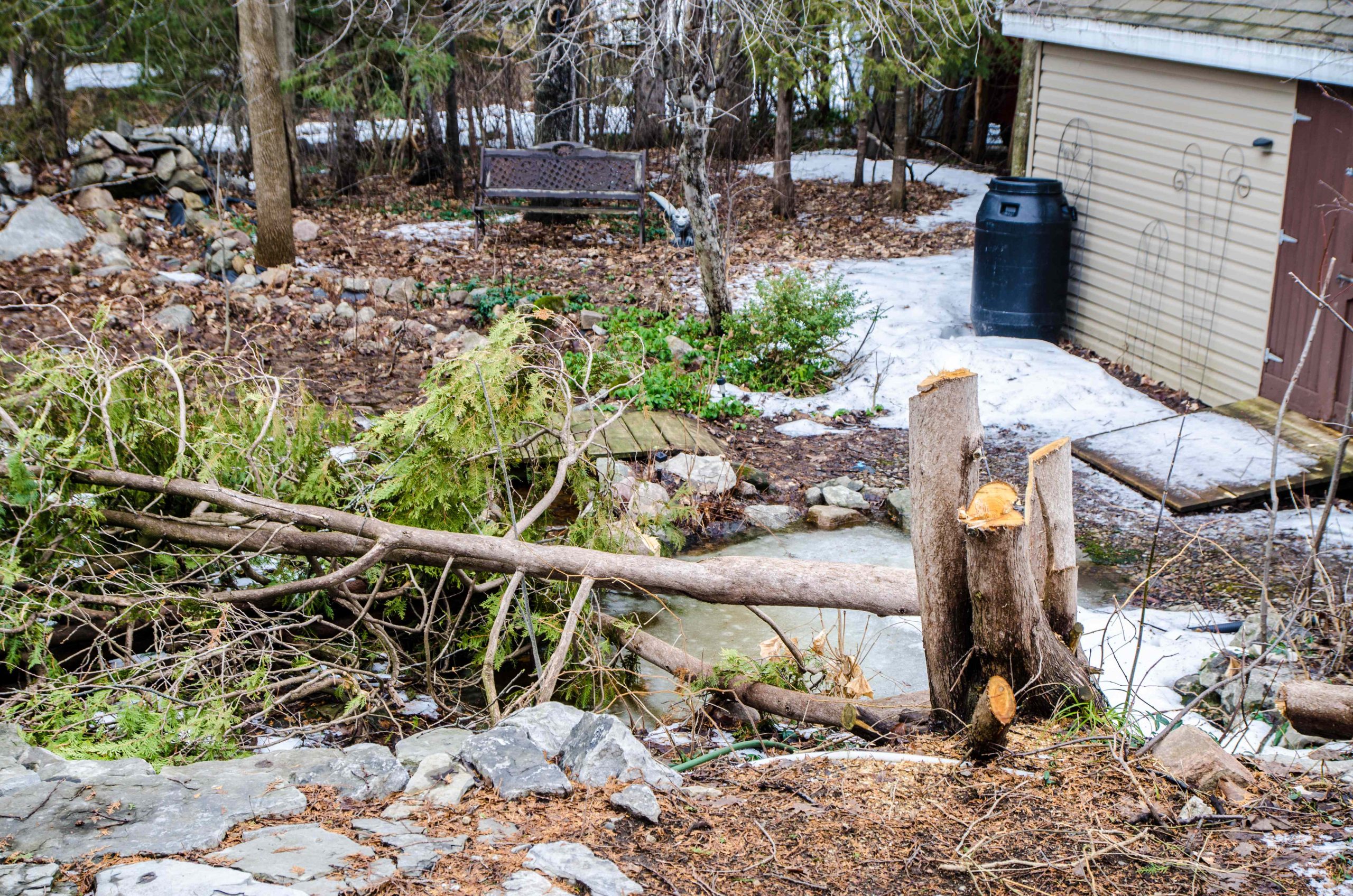
During the beginning and tail end of winter, when the temperatures fluctuate more widely day by day, ice storms can hit hard and fast. And no matter the time of year, thunder storms and high winds can leave behind a scattering of twigs, leaves, and pinecones, or worse: pull down entire branches, take out trees, damage your fencing, or even pull shingles off the roof.
Immediately hiring pros to come assess and cleanup the yard after a storm is definitely a viable option, but you might be able to save on the cost of some yard cleanup with DIY. Generally, DIYers equipped with the right information and tools can clean up sticks, leaves, twigs, fallen branches, and broken tree limbs without having to call in a pro.
Here’s how DIYers can best tackle storm cleanup in your yard without breaking the bank—or your back.
Meet the Expert
- Gabe Boersma is the owner of Gabe’s Top It Or Drop It Tree Service.
- Brandon Wells is a roofing pro and the CEO and founder of TrueCraft Construction.
- Aleks Krylov is the founder and president of Stern Roofing and Stern Gutters.
How to Best Tackle Storm Cleanup
JJ Gouin / Getty Images
Aleks Krylov, founder and CEO of Stern Roofing and Stern Gutters, notes that you should “start with a simple safety check” of your yard before entering.
“Look around the property before touching anything,” Krylov says. “Ice storms often leave loose branches, falling ice, and slippery ground.”
Be mindful of fallen branches and tripping hazards that might be completely buried under snow, if you’re dealing with a winter storm. Clear snow and ice while picking up small branches and debris, and work toward the center of the yard.
You’ll want to clearing any access points and high-traffic walking areas like the driveway, walkway, and any gates to the yard, first. This will allow emergency crews to get to you in the event of further weather emergency or injury.
Don’t Miss
The Best Cleanup for Large Limbs
Larger branches should be cut up into smaller pieces, rather than attempting to move them in one solid piece. Water-logged wood from a storm weighs a lot more than you think, and it’s not worth back injury to lift them in one piece.
If they are pinned by other branches or sitting on your fencing, you should clear the weight off the top, and use the utmost caution for falling debris or limbs or fence parts that whip toward you if you saw or clear a tension-bearing area. Wear safety goggles to protect your eyes.
How to Address Property Damage
If you find that shingles are missing or the fence is damaged, first take photos of the damage for your insurance records.
A downed fence can usually just be cut up and disposed of so that you have a clear area to repair or install a new fence.
If your roof is damaged, you will need to cover the exposed area with a temporary tarp, as long as this can be done safely from the ground or from a low ladder. Contact a roofing contractor to assess the damage and make repairs as soon as possible. Missing shingles can quickly turn into leaks and significant water damage if the roof is not repaired.
How to Address Downed Power Lines
One of the most severe hazards you may encounter after a storm is downed power lines. Strong winds or heavy ice can damage the power line supports and pull the wires to the ground. This is not a situation any homeowner should attempt to handle on their own. In fact, do not even go near the power lines or any objects in contact with the power lines.
“Stay at least 30 feet away and call the utility company,” tree service owner Gabe Boersma says. “Even if a line isn’t sparking it can be hot, and a wet tree limb touching that wire can kill you just as fast as the wire itself. Our crews don’t even touch a tree near a line until the power crew gives us the green light.”
If you can’t get through to the power company immediately, contact your local emergency services so that they can assess the situation and create a barrier around the area to prevent anyone else from approaching the hazard.
Additional Safety Tips
Pablo Jeffs Munizaga – Fototrekking / Getty Images
There are many hazards to be aware of when you are cleaning up after a storm, especially when it comes to power lines, but also when it comes to bending and lifting heavy objects.
The pros we interviewed provided this list of additional ice storm cleanup safety tips:
- Stack debris in small piles so it is easier to move or load.
- Avoid dragging heavy branches across siding or gutters, which can cause damage.
- Drag anything over 50 pounds on a tarp, or roll it in a wheelbarrow.
- In addition to eye protection, steel-toed boots, and thick leather gloves. Wet, frozen branches can snap unpredictably when under pressure and jagged edges cut through lightweight work gloves.
How to Dispose of Storm Debris
Keep in mind that regular household garbage, construction debris (fences and roofing), and organic debris (branches and tree limbs) will typically have different disposal requirements, such as curbside pickup, local garbage collection centers, or specialized appointment-based collection. Once you have your pile of limbs (or when the storm is coming down and you’re sheltering inside), check with city, county, and emergency management websites for designated protocol.
“As you go, sort your materials into piles. Organic debris in one and structural materials, for example, fence boards, shingles or gutter pieces in another. Anything dangerous or anything with electricity gets flagged and left alone. Branches less than 4 inches in diameter can usually be cut with a hand saw and tied in 4 foot lengths for curbside pickup,” explains Brandon Wells, the CEO and founder of TrueCraft Construction.
When Should Storm Cleanup Be Left to the Pros?
Bibirajh Sivamyinthan / Getty Images
Even the most ambitious DIYers can run into situations after an ice storm that they simply should not handle on their own. Downed power lines is the most obvious case, but you should also call the professionals in the following instances:
- If your gutters have been pulled loose
- If the shingles on the roof have been pulled off
- If there is debris on your roof
- If a large tree or tree limbs are resting on the house
- “If a tree is leaning, split, or tangled in another tree, it requires professional rigging and heavy equipment to bring it down without further damage,” Boersma says. “Broken limbs caught up in the canopy are called widow makers for a reason.”
- If any type of climbing or working at heights is required
- If the job involves a ladder or a chainsaw over your head, it’s a pro’s task to resolve,” Boersma adds.
- If roof damage penetrates penetrating beyond the surface of the shingles and into decking or rafters and is a structural problem that experts should handle as soon as possible
Read the full article here